
Frevo is what happens when a city turns speed, brass and movement into a public language. In Recife and Olinda, the music belongs to the street. Melodies arrive fast, the brass writing is athletic, percussion keeps the music moving forward, and dancers answer with a vocabulary called passo.
Visitors often recognize the small colorful umbrellas before they know the name of the rhythm. But frevo is much more than a Carnival symbol. It is a musical tradition with its own repertory, composers, orchestras, dance technique and community history. Understanding a few of those details changes the way a traveler hears Pernambuco.
What is frevo?
Frevo emerged in Recife around the end of the nineteenth century and became deeply connected to Carnival in Recife and Olinda. Its musical language grew through urban bands and fanfares, drawing on marching music, polka, Brazilian tango and other repertories circulating at the time. The result is not simply “fast samba.” Frevo has its own phrasing, instrumentation and rhythmic identity.
UNESCO inscribed Frevo, performing arts of the Carnival of Recife on the Representative List of the Intangible Cultural Heritage of Humanity in 2012. IPHAN had already recognized frevo as Brazilian cultural heritage in 2007. Those designations matter because frevo is not only a style of music. It is a network of musicians, dancers, clubs, blocks, repertories and knowledge passed through generations.
Why frevo sounds so different
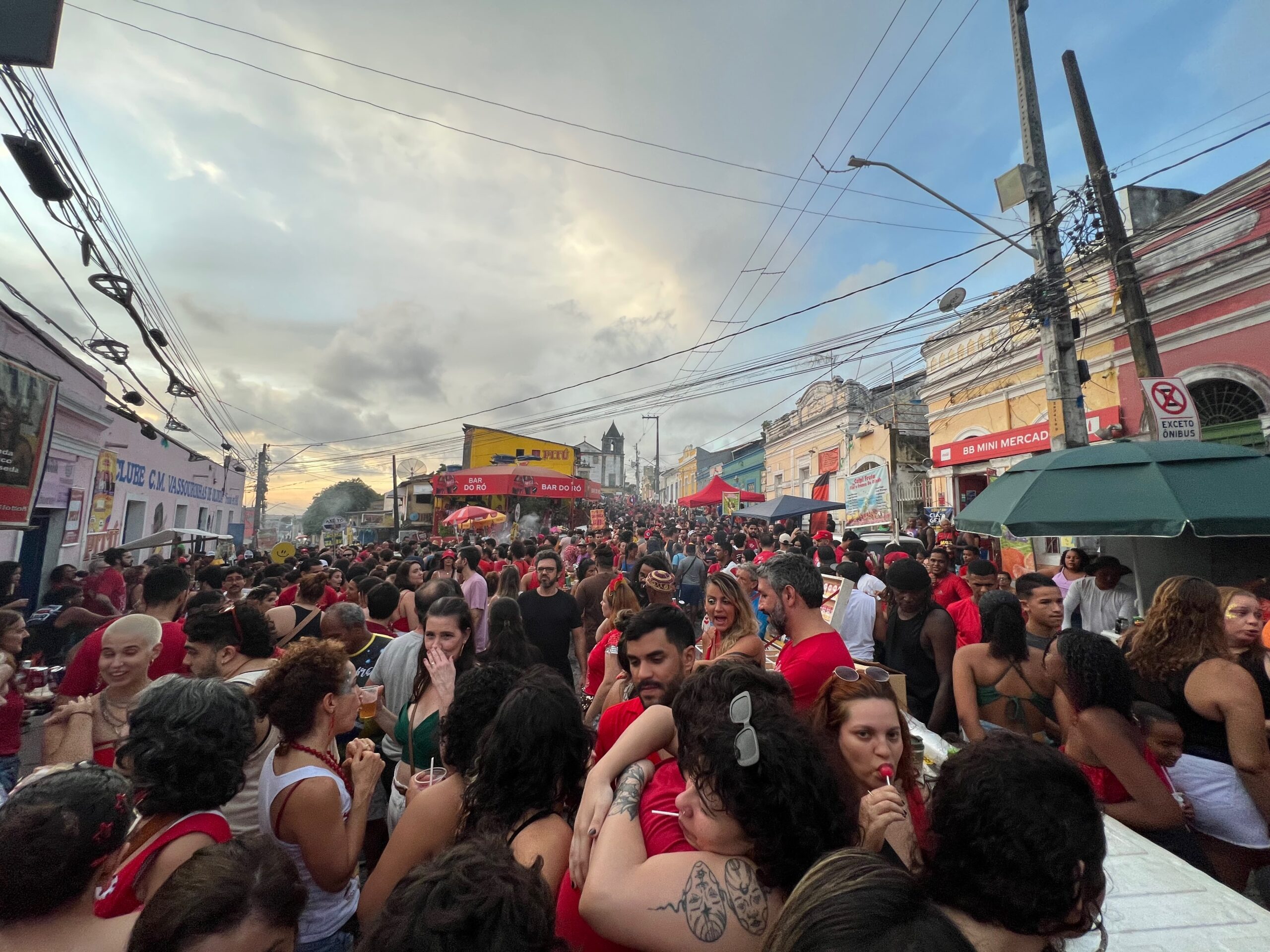
The first thing to notice is the melodic writing. Frevo de rua often relies on brass and reeds such as trumpets, trombones and saxophones, supported by tuba and percussion. The lines can move through repeated notes, quick arpeggios, sudden changes of register and sharp accents. They have to remain clear even when the musicians are outdoors, surrounded by dancers and moving crowds.
That physical setting shapes the sound. This is music designed to project into a street, not disappear politely into the background of a room. A good frevo orchestra can sound explosive without becoming sloppy. The excitement comes from precision under pressure.
Frevo de rua, frevo-canção and frevo de bloco
One useful way to understand frevo is to listen for its three classic forms.
- Frevo de rua is instrumental and closely associated with the force of the street orchestra. This is the form many travelers imagine when they picture brass cutting through the Carnival crowd.
- Frevo-canção adds a sung text to the orchestral language. The voice changes the listener’s focus, but the rhythmic drive remains recognizably frevo.
- Frevo de bloco has a more lyrical character and is associated with blocos líricos, strings and woodwinds, together with choral singing. It can feel more nostalgic and song-centered than frevo de rua.
These categories are useful because they prevent the common mistake of treating frevo as one endlessly repeated Carnival tune. The repertory has contrast, history and different performance settings.
The dance is called passo
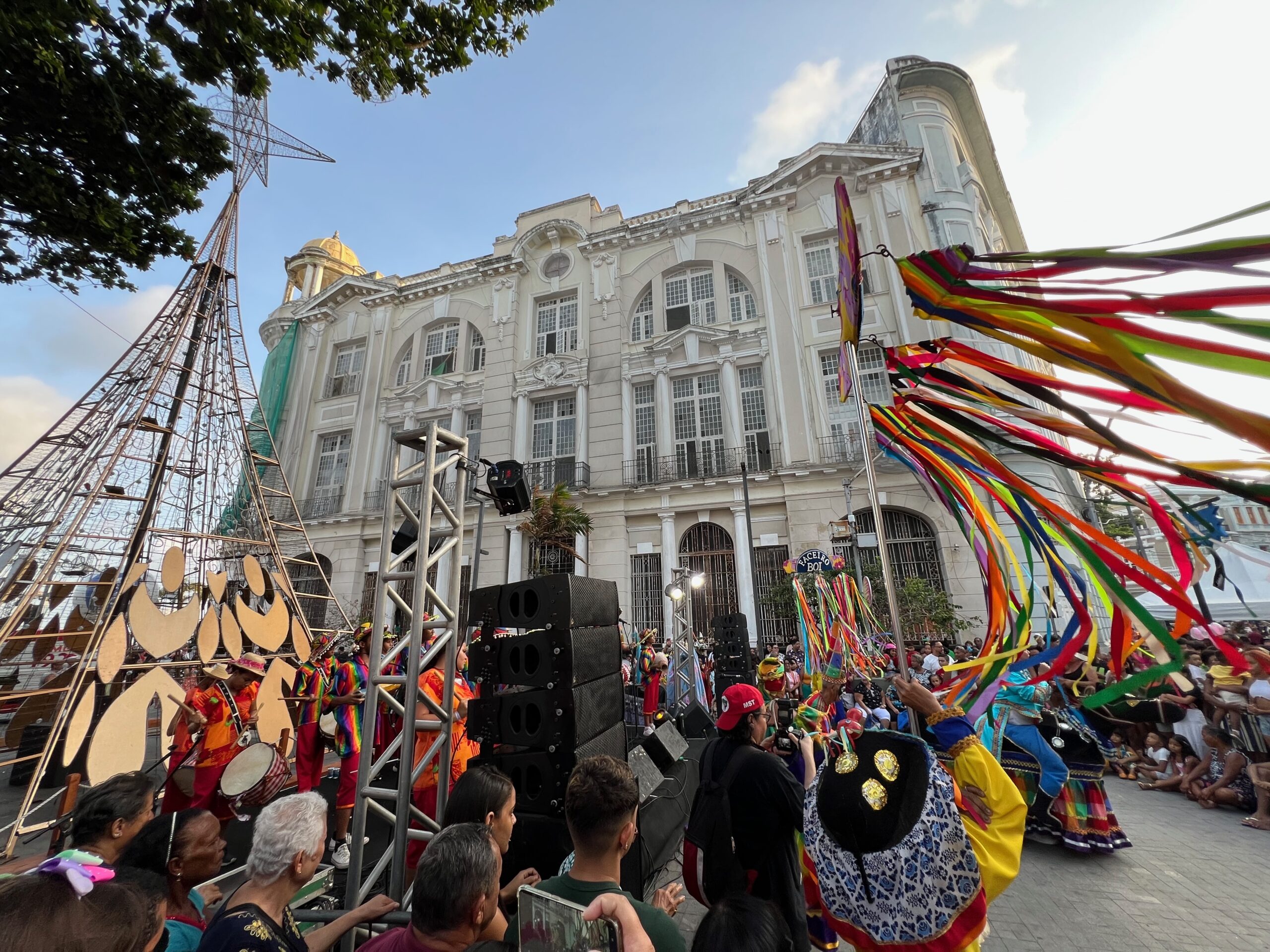
Frevo’s dance vocabulary is known as passo. It includes quick changes of direction, low positions, kicks, balances and acrobatic movements. The famous umbrella is not merely decoration. It became part of the dancer’s visual and physical language, helping define silhouettes and movement in the crowd.
Music and dance developed in conversation with the street. That is important. Watching a frevo dancer without listening to the accents in the orchestra loses half the information. The body shows where the musical energy lands.
How to listen to frevo for the first time
Start with the brass. Try to follow one melodic line instead of hearing the orchestra as a single bright sound. Then listen for the low register and percussion underneath it. Notice how the melody pushes forward through articulation rather than simply through volume.
Next, watch a passista. Look for the relationship between a musical accent and a change of level, direction or balance. Frevo becomes much easier to understand when the ear and the eye work together.
If you have time in Recife, the Paço do Frevo is an unusually useful cultural stop because it treats frevo as living practice, not just as a collection of costumes. Its exhibitions and educational work help visitors hear distinctions among frevo de rua, frevo-canção and frevo de bloco before encountering the music in the street.
Recife, Olinda and Carnival
Frevo is especially visible during Carnival, but it is worth resisting the idea that the tradition exists only for a few festival days. Rehearsals, orchestras, cultural institutions and local repertories keep the music present across the year. Carnival concentrates that energy and brings it into public space on an extraordinary scale.
Recife and Olinda also make sense together musically. The geography is close, but the street experience changes from one place to the other. Moving between the historic centers gives travelers a better sense of how the same tradition can feel different depending on architecture, procession routes, crowd density and the organization of the event.
Frevo belongs inside a bigger Pernambuco story
Frevo is one reason Pernambuco deserves more attention from music travelers, but it is not the only one. Maracatu Nação, forró, coco, ciranda and manguebeat all tell different stories about the region. Our companion article, What Is Maracatu? A Music Traveler’s Guide to Recife’s Deep-Drum Tradition, goes deeper into another of Recife’s essential musical worlds.
For a broader overview of how Pernambuco fits into Brazil’s musical geography, Musical Getaways also publishes a musicologist’s guide to Brazilian music genres.
Traveling to hear the music in context
Our Brazil Music & Cultural Tour connects Recife with Rio de Janeiro and Salvador, so travelers can compare regional music traditions instead of treating Brazilian music as one national sound. If you want more time in Pernambuco, we can also shape a private itinerary around your interests.
Request a quote for a Brazil music journey and tell us what you want to hear, whether that means frevo and maracatu in Recife, samba in Rio, Afro-Brazilian traditions in Salvador, or a combination of all three.
Further reading: UNESCO on frevo and IPHAN on Pernambuco’s intangible cultural heritage.