
Maracatu is one of the sounds that changes the way you hear Recife. The low drums arrive with physical weight, but the power of the music is not simply volume. It comes from the relationship among the drum parts, the bell pattern, the calls, the procession and the communities that have carried the tradition across generations.
For travelers, maracatu can be easy to reduce to a colorful Carnival image. That misses what makes it important. Maracatu Nação, also known as maracatu de baque virado, is a musical, devotional and processional tradition rooted in Pernambuco, especially the Recife metropolitan area. Its history is tied to Afro-Brazilian communities, religious practice and the symbolic language of royal courts.
That is why the best first question is not “How loud are the drums?” It is “What is each part doing, and what does this group mean to the people who belong to it?”
What is maracatu?
There are different traditions that use the name maracatu, and they should not be treated as interchangeable. Maracatu Nação or baque virado is the form most closely associated with the Recife metropolitan area and with the deep ensemble sound many visitors recognize. Maracatu Rural or baque solto developed in the Zona da Mata of Pernambuco and has its own history, characters, musical organization and performance practice.
Brazil’s National Historical and Artistic Heritage Institute, IPHAN, recognized Maracatu Nação as Cultural Heritage of Brazil in 2014 and revalidated that recognition in 2026. It is also currently part of UNESCO’s 2026 nomination process for the Representative List of the Intangible Cultural Heritage of Humanity. That international process is still underway, which is worth noting because maracatu is not a tradition waiting to be “discovered” by tourism. It is a living cultural practice with its own communities, responsibilities and systems of transmission.
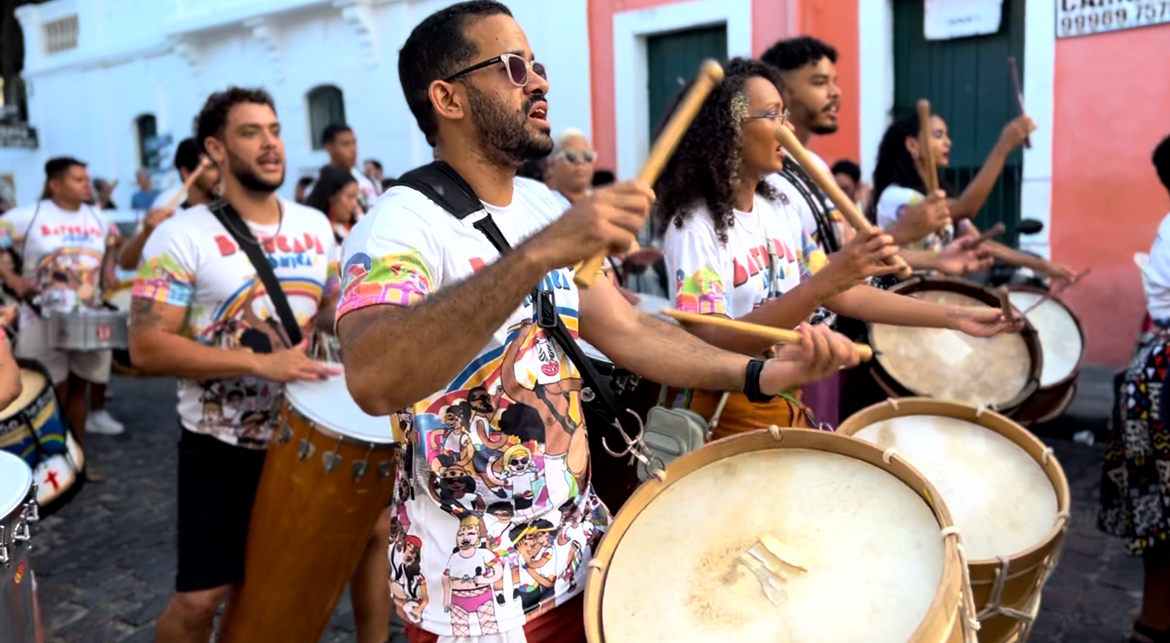
The instruments of Maracatu Nação
The alfaia is the instrument many listeners notice first. It is a large rope-tension drum played with sticks and worn on the body. In a maracatu ensemble, several alfaias do not simply strike the same rhythm together. Different parts interact, creating weight, response and movement around the pulse.
The gonguê, a large metal bell, provides a sharp pattern that can cut through the dense drum sound. The caixa and tarol add snare textures. The mineiro or abê contributes a continuous layer of smaller subdivisions. Voices enter through calls and chorus responses. The exact instrumentation and organization can vary by nation, which is another reason to pay attention to the name of the group rather than treating “maracatu” as a single anonymous beat.
If you are listening for the first time, try separating the ensemble into registers. Hear the low alfaias first. Then find the bell. Listen for the snare layer. Finally, notice where a vocal call or cue changes the density of the group. Once those parts become distinct, the music feels less like a wall of percussion and more like a coordinated conversation.
Why procession matters
Maracatu Nação is not only a percussion ensemble. The cortege includes symbolic figures and a royal vocabulary that carries histories connected to Black life in Brazil and older coronation traditions associated with Congo kings and queens. Music, movement, visual symbolism and devotion belong to the same cultural system.
This matters for travelers because a rehearsal, a Carnival procession and a staged performance are not equivalent experiences. The context changes what the music is doing. A good guide should explain that difference instead of presenting every encounter as entertainment created for visitors.
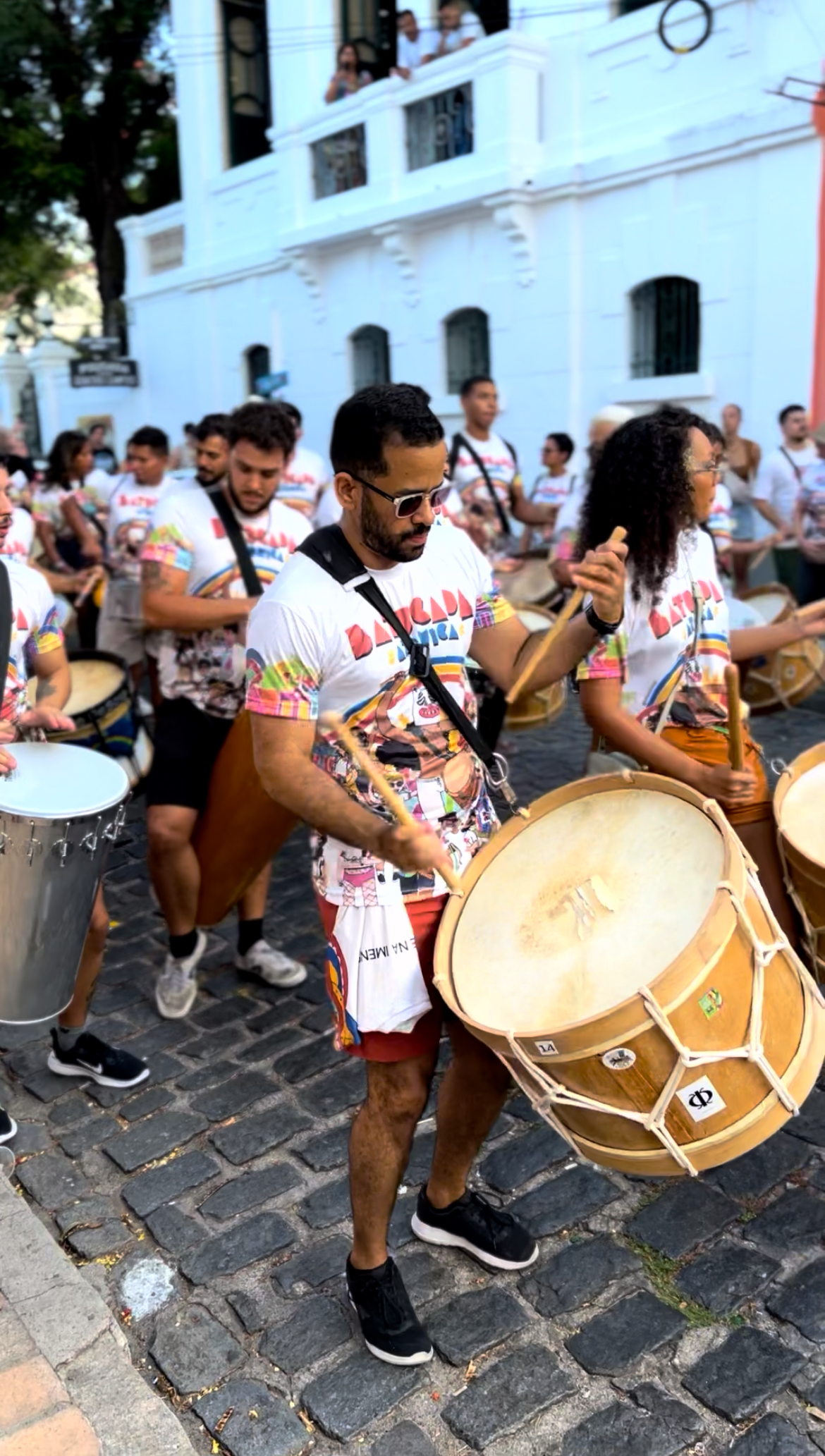
How to experience maracatu respectfully in Recife
For music-minded travelers, the most meaningful encounters usually come from listening in context. That may mean attending a public rehearsal, hearing a nation during Carnival season, visiting a cultural institution, or joining an experience arranged with local musicians and community partners.
- Learn the name of the nation. Maracatu groups have distinct histories and identities.
- Ask before photographing or recording. Not every rehearsal, object or devotional setting should be treated as open content.
- Listen before trying to participate. A workshop created for visitors is different from entering someone else’s rehearsal uninvited.
- Pay the people teaching you. Cultural access should support musicians, guides and community organizations, not extract from them.
- Leave room for complexity. Maracatu can involve music, faith, neighborhood identity, memory and Carnival at the same time.
Maracatu and the wider sound of Pernambuco
One reason Recife is such a strong city for music travel is that maracatu exists beside other traditions rather than in isolation. Frevo brass bands, forró, coco, ciranda, caboclinho and the electric language of manguebeat all contribute to Pernambuco’s musical identity. Hearing several of them in the same trip makes the differences more useful than a list of genre names ever could.
For the brass-and-dance side of Pernambuco, see our companion guide to frevo in Recife and Olinda.
For a broader map of Brazilian styles, our parent company Musical Getaways has a musicologist’s guide to Brazilian music genres. Here on Brazil Music Tours, we will go deeper into the regional traditions that travelers can encounter on the ground.
Following the rhythm into Recife
Our Brazil Music & Cultural Tour includes Recife as part of a wider journey through Rio de Janeiro, Salvador and Pernambuco. The point is not simply to collect famous genres in three cities. It is to hear how place changes the music, and how musicians explain their own traditions when there is enough time to listen.
If Recife and Pernambuco are central to the Brazil trip you want to design, you can also request a quote for a private Brazil music journey and tell us which musical questions you want the itinerary to follow.
Further reading: IPHAN on Maracatu Nação and UNESCO’s 2026 nomination file.